
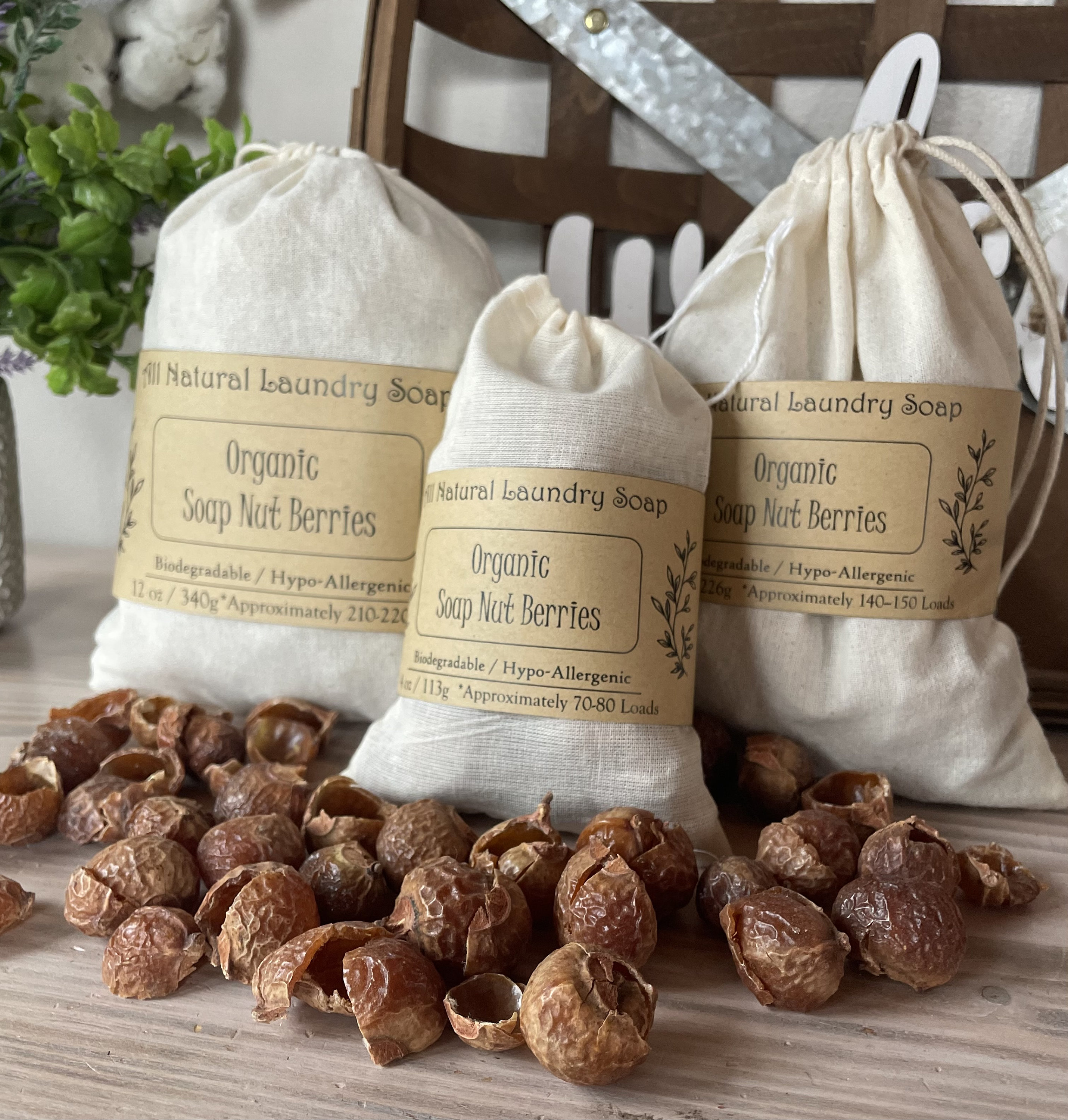
Long before supermarket shelves were lined with plastic detergent bottles, people were reaching for a small, wrinkled berry to keep their clothes and skin clean. That berry is the soap nut — and it's having a well-deserved comeback among people looking for a natural, sustainable, and gentle alternative to synthetic cleaning products.
In this guide, we'll cover everything you need to know about soap nuts: what they are, where they come from, how they clean, and how you can start using them today.
What Are Soap Nuts?
Soap nuts (also called soap berries or soapberries) are the dried fruit of the Sapindus mukorossi tree, native to the Himalayan regions of India and Nepal. Despite the name, they aren't actually nuts — they're berries with a hard outer shell that contains saponins, a naturally occurring soap-like compound.
When soap nut shells come into contact with water and agitation, the saponins are released and produce a mild, natural lather — similar to a gentle soap. This is what makes soap nuts effective for cleaning without synthetic chemicals, sulfates, or artificial fragrances.
A Cleaning Tradition Passed Down Through Generations
Soap nuts aren't a new wellness trend — they've been used for over 2,000 years in Ayurvedic medicine and traditional South Asian households. For generations, families used soap nuts (often called reetha in Hindi) to wash clothes, hair, and even delicate fabrics like silk and wool.
Long before commercial detergents existed, soap nuts were the go-to household cleaner — passed down from grandmothers to mothers to daughters as a trusted, natural staple.
Today, as more people move toward sustainable and non-toxic living, soap nuts are being rediscovered by a new generation looking for the same time-tested benefits.
How Do Soap Nuts Work?
The magic is in the saponins. Here's the basic process:
- Soap nut shells are placed in water (either soaked or boiled).
- Saponins are released, creating a natural surfactant.
- The surfactant lowers the surface tension of water, allowing it to lift dirt, oil, and grime away from fabric or skin.
- The shells can be reused several times before their cleaning power is depleted.
This makes soap nuts a low-waste, multi-use cleaning product — a single batch of shells can last for multiple wash cycles.
Benefits of Soap Nuts
1. All-Natural and Biodegradable
Soap nuts contain no synthetic chemicals, parabens, sulfates, or artificial fragrances. They're 100% biodegradable and compostable after use.
2. Gentle on Skin
Because they're free from harsh chemicals, soap nuts are ideal for people with sensitive skin, eczema, or allergies — including babies and those with fragrance sensitivities.
3. Hypoallergenic and Fragrance-Free
Unlike many commercial detergents, soap nuts have a very faint, natural scent, making them a great option for people sensitive to strong perfumes.
4. Eco-Friendly Packaging and Footprint
Soap nuts typically come in minimal, compostable packaging — a stark contrast to plastic detergent jugs that pile up in landfills.
5. Multi-Purpose Use
Soap nuts aren't just for laundry. They can also be used for:
- Natural shampoo or hair wash
- Homemade liquid soap or body wash
- Cleaning jewelry
- General household cleaning (with diluted soap nut liquid)
- Pet-safe shampoo
How to Use Soap Nuts for Laundry
Using soap nuts is simple:
- Place 4–6 soap nut shells into a small cloth bag or cotton sack.
- Toss the bag into your washing machine drum along with your laundry.
- Wash as usual (works in both hot and cold water, though warm water activates saponins more effectively).
- Reuse the same shells for 4–5 wash loads before composting them.
For tougher stains, some people boil the shells first to create a concentrated soap nut liquid, which can be added directly to the wash.
Soap Nuts vs. Commercial Detergent
| Feature | Soap Nuts | Commercial Detergent |
|---|---|---|
| Chemical content | None | Sulfates, dyes, synthetic fragrance |
| Biodegradability | Fully biodegradable | Often non-biodegradable |
| Skin sensitivity | Hypoallergenic | Can trigger irritation |
| Packaging waste | Minimal/compostable | Plastic bottles |
| Cost per load | Low (reusable shells) | Varies |
| Scent | Very mild, natural | Strong, artificial |
Are There Any Downsides?
Soap nuts aren't perfect for every situation:
- They produce a milder lather than commercial detergents, which can feel unfamiliar at first.
- They may be less effective on heavily soiled or greasy stains without pre-treatment.
- Availability can be limited to specialty or online retailers.
Despite these tradeoffs, many users find the environmental and health benefits well worth the adjustment.
Where to Buy Soap Nuts
Soap nuts are widely available through natural wellness retailers, eco-conscious marketplaces, and online stores specializing in zero-waste products. Look for organic, deseeded soap nuts for the best quality and lather.
Final Thoughts
Soap nuts prove that sometimes the best solutions aren't new inventions — they're old wisdom waiting to be rediscovered. As more people seek natural, sustainable alternatives to synthetic household products, this humble berry continues to earn its place as a trusted, time-tested cleaner — just as it has for generations before us.